At the start of 2014, I made a decision to eat less meat. I relied on meat being the ‘main’ feature of our family dinners about 4-5 times a week, mostly because I knew how to cook it and it bulked out our plates suitably. If I was going to reduce my meat consumption to 2-3 times a week then I needed to expand my vegetarian (or vegan) know-how beyond pasta and stir-fry!
I came across Deborah Madison’s The Green’s Cookbook at the library and was immediately impressed. The first thing I learned was that vegetable stock (and she offers many different types) is not as difficult as I had always assumed. Yes, it is an extra thing to prepare for soup etc, but if it’s made in advance and stored in the freezer, then suddenly having fresh vegetable stock at hand isn’t so far-stretched. And for some recipes, having homemade stock versus powdered stock has a big affect on the overall taste.
Although the book has been returned to the library, this is what I remember about preparing a [basic] vegetable stock:
- Use only fresh produce. This probably sounds like I’m stating the obvious, but I had certainly been guilty of throwing some ‘seen better days’ veg into past chicken stocks. But, if you want fresh tasting vegetable stock then use fresh vegetables - you will get out of it, what you put in. The same goes for herbs.
- Chop the vegetables up to attain maximum flavour. Again, I’ve been prone to just roughly chop or break up the vegetable and toss them in the pot. Smaller pieces means more surface area comes into contact with the water you’re trying to flavour.
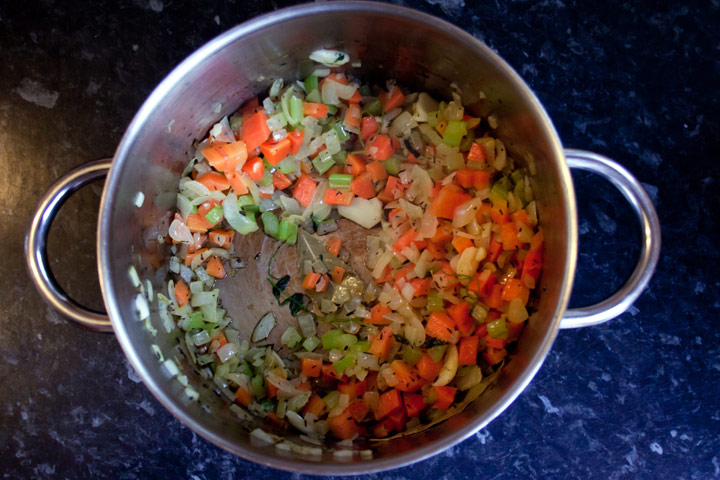
- Gently brown the aromatic vegetables. Colouring the onion, celery and carrots in butter (my preference) or oil at the very beginning adds depth to the final stock. Past attempts at vegetable stock always ended up tasting bland - therefore, I almost never bothered - that this tip was a revelation. The vegetables become a bit sweeter and richer which infuses the water, as does the butter.
- Consider adding peelings from vegetables that will be featured in the main dish. This one is a bit trickier because not all peelings result in good flavour (e.g. carrot ends will be give a bitterness) and I am not very confident with just throwing things in on a whim. However, Deborah Madison did suggest that you could boil a vegetable or its peelings in a separate pan to see what flavour it infuses into the water. If it’s good, go ahead and add it to the main stock, otherwise leave it out.

If you get the chance to flip through The Green’s Cookbook or Deborah Madison’s The New Vegetarian Cookbook for Everyone, then make sure you have a comfy spot and a cup of tea to hand, because you won’t want to rush through it. There aren’t any pictures, but she has a way of describing cooking techniques etc. that are very helpful.
Recipe
This is my basic vegetable stock, adapted slightly from Deborah Madison’s (The New Vegetarian Cookbook for Everyone) to suit my tastes:
- 1 large onion, chopped
- 2 large carrots, chopped
- 2 celery ribs, chopped
- 1 tbsp olive oil or vegetable oil
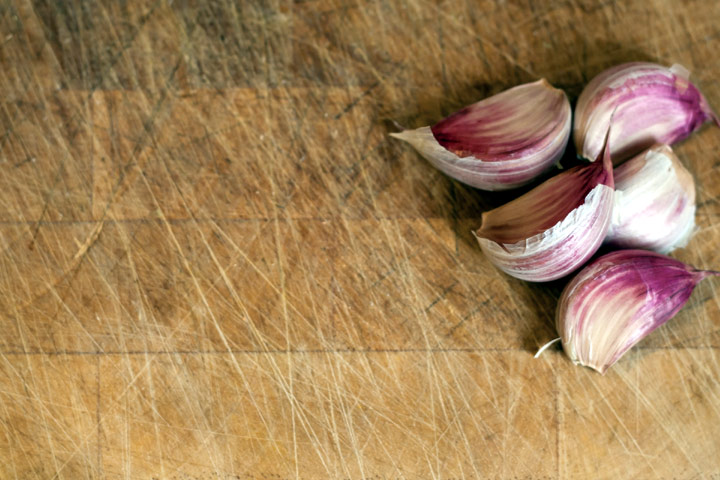
- 5 cloves garlic, crushed
- 8 parsley sprigs
- 6 thyme sprigs (or ½ teaspoon dried)
- 2 bay leaves
- 2 tsp sea salt
- 2ltr of cold water
Heat oil in a large soup pot and brown vegetables, garlic and herbs over medium heat for 5-10 minutes, stirring frequently. When the vegetables are are nicely browned (but not burnt), add the salt and water and bring to a boil. Lower the heat and simmer, uncovered for 30 minutes. Strain.