I have been trying to work up the nerve to attempt some sourdough bread (without commercial yeast) for several months. In 2015, I will bite the bullet and give it a shot.
In the meantime, I’m sticking with something easy. No, not the bread machine; it only made an appearance once or twice a year, so we gave it away. Something even easier than the bread machine - once you take cleaning up into consideration - Irish soda bread.
Did you know that there’s a society dedicated to the preservation of Irish soda bread (sodabread.info)? Apparently, soda bread originated from Native Americans but the Irish adopted it as their own due to poverty; it was the easiest and cheapest bread to make. I can vouch for it being the easiest; I have yet to make a bad loaf.
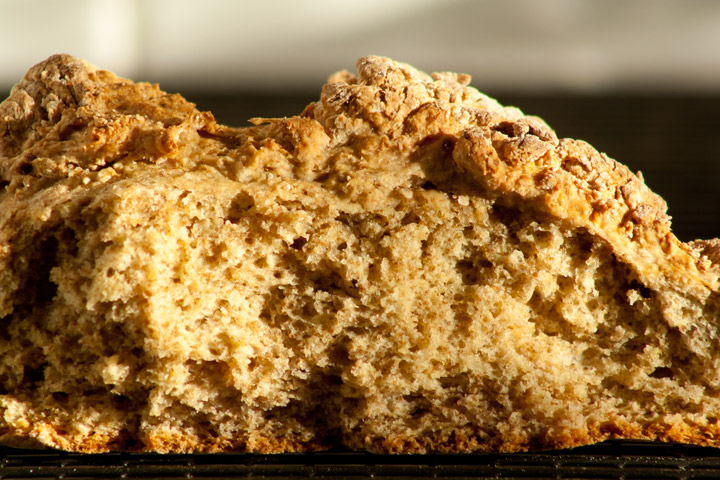
The rustic loaf isn’t necessarily the most appealing looking, but the smell is heartwarming and it tastes unlike any other bread I’ve had. With Welsh Cawl (stew) on the menu for tomorrow, Irish soda bread seems like the perfect accompaniment.
Recipe
(Hugh Fernley-Whittingstall)
- 250g plain flour
- 250g wholemeal (wholewheat) flour
- 2 tsp bicarbonate of soda
- 1 tsp fine sea salt
- Approx. 400ml buttermilk or live yoghurt
- A little milk, if necessary
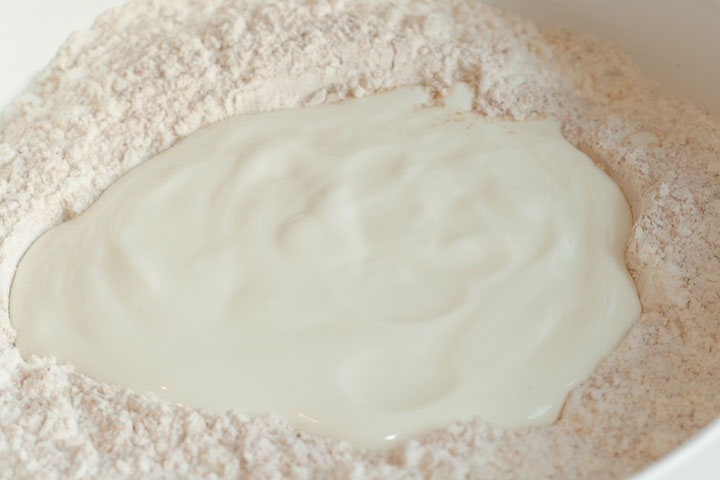
Sift the flours and bicarbonate of soda into a large mixing bowl and stir in the salt. Make a well in the centre and pour in the buttermilk, stirring as you go. If necessary, add a tablespoon or two of milk to bring the mixture together; it should form a soft dough, just this side of sticky.
Tip it out on to a lightly floured work surface and knead lightly for about a minute, just long enough to pull it together into a loose ball but no longer – you need to get it into the oven while the bicarb is still doing its stuff. You're not looking for the kind of smooth, elastic dough you’d get with a yeast-based bread.
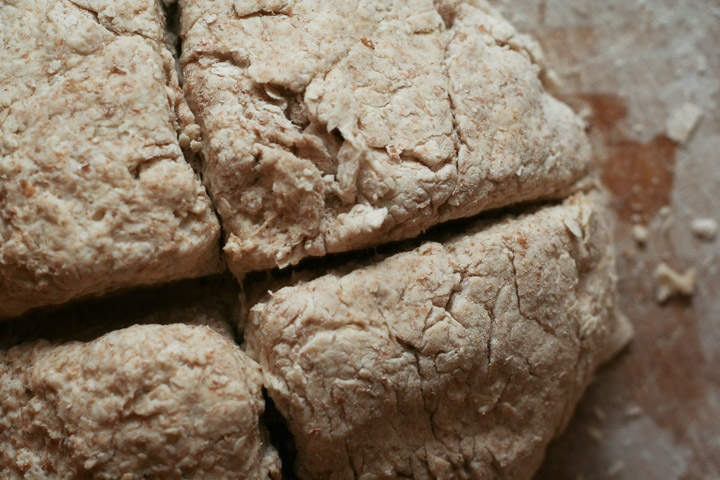
Put the round of dough on a lightly floured baking sheet and dust generously with flour. Mark a deep cross in it with a sharp, serrated knife, cutting about two-thirds of the way through the loaf. Put it in an oven preheated to 200°C/gas mark 6 and bake for 40-45 minutes, until the loaf sounds hollow when tapped underneath.
Cool on a wire rack if you like a crunchy crust, or wrap in a clean tea towel if you prefer a soft crust.
To serve:
I prefer the soda bread at room temperature with a bit of butter, but Hugh Fernley-Wittingstall suggests having it warm from the oven or toasted with jam.